Chapter 1
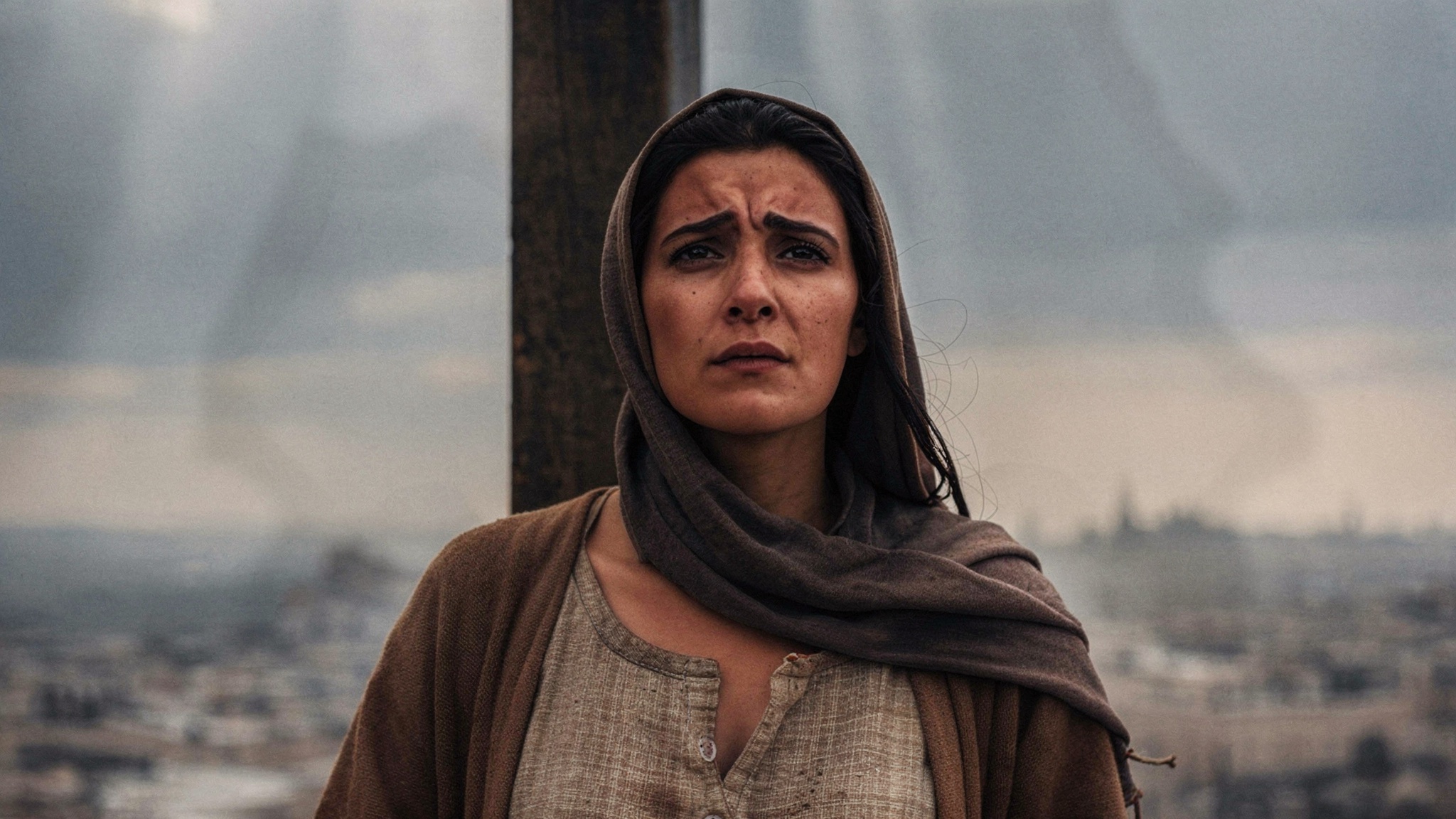
The Faith of Mary Magdalene
A journey through history, memory, and devotion
Love
Who remains when everything begins to fall apart?
Opening Movement
The ministry had moved in rhythm—crowds gathering, roads traveled, voices rising.
But as they approached Jerusalem, something changed.

0:00 / 3:25
The Faith Within Her Story
The circle that once moved together begins to loosen. Confidence gives way to confusion, proximity gives way to distance, and the voices that once sang in harmony now struggle to be heard over the growing noise of doubt and fear.
Even Jesus stops teaching publicly in the same way. The crowds that once followed him now scatter, and the disciples who once walked closely with him now keep their distance and prefer private moments with the teacher.
A heavy silence falls over the group as they approach Jerusalem, and the tension is palpable. The once vibrant and dynamic ministry now feels fragile and uncertain, as if it could unravel at any moment.
There are moments when words no longer carry what is coming. When understanding cannot keep pace with reality. And what remains is not clarity… but presence.
The Prophet of the Burial
John 12 describes a moment of tension that comes before Passover. It is called the "Annointing at Bethany." A woman, known as Mary, enters the room carrying costly oil known as "nard."
Without announcement, she breaks the jar and pours it over him.
Those present object.
The gesture is too extravagant.
Too unnecessary.
But Jesus receives it differently.
He calls it preparation.
He calls it beautiful.
The gospels do not agree on the woman’s name.
But they agree on the moment.
Someone understood—
or at least trusted enough to act
when others still hesitated.
The Table
The disciples gather at the table for a meal expecting a familiar rythm of food, converstaion, teaching.
But something else is revealed. A new dynamic emerges. A new understanding takes shape. A new presence is felt. Instead, beytrayal, denial, and abandonment are revealed. A sentence breaks the room:
One of you will betray me
The words land, but not all at once, each hears them differently. None yet understand what is already in motion.
The disciples look at each other, trying to understand who could be the one to betray Jesus. They are filled with confusion and fear, and the atmosphere becomes tense and uncomfortable. What will come is denial, abandonment, and betrayal.
It continues-- the direct pronouncment of the denial of Peter. Imposible scenario, but in our lives we can understand it.
Never forget, Jesus could speak plainly, but in doing so it brings blame, prosecution, for the others to commit the sin of judgment. The learning comes in the process of revelation, not in the naming- not in the blame. An opportunity for his disciples whom he loves, to move into a new understanding.
One among them is not named at the table within the gospels. But you can be sure of her presence.
Not every kind of faithfulness is tested at the table. Some will be tested in what comes after. Others already have...
The Only One Standing
The Men:
Mark 14:50 says, "And they all forsook him and fled." Peter, the "rock," denies Jesus three times. The other disciples scatter in fear, leaving Jesus alone to face his arrest and crucifixion.
The Women:
The Gospels list the women "looking on from a distance" and then moving closer.
The Standing Mary:
In John 19:25, she is literally para tō staurō—"standing by the cross."
The Tower at the Cross
Scene:
The Roman soldiers are mocking, the sky is darkening, and the "Rock" (Peter) has shattered and hidden.
The Imagery:
Mary stands as a literal tower of strength. She doesn't have a "demon" left in her; she has only the Rūḥā (the Spirit) of absolute love. She is the anchor point for the Mother (Mary of Nazareth) who grieves nearby. Perhaps another anchor point for the future of humanity.
The Roman "Death Watch": A Deadly Risk
In the 1st century, the Roman punishment of crucifixion wasn't just about execution; it was about humiliation and deterrent.
The Guard (Custodia):
Roman law required a quaternion (a squad of four soldiers) to stay at the cross until the victim died. Their job was to prevent friends or family from taking the person down to save them.
The Danger of Association:
To stand "by the cross" (para tō staurō) was to identify yourself as a sympathizer of a "Rebel King" (Crimen Laesae Maiestatis—treason).
The Contrast:
Peter stayed in the shadows of the courtyard because even being recognized as a "follower" could lead to arrest. Mary, by standing in the direct line of sight of the Roman guards, was essentially daring them to arrest her. But that was not her purpose.
Why she stayed:
Historians suggest the Romans often ignored women because they weren't seen as a political threat. Mary used her "invisibility" as a woman to provide a "visible" presence of love.
and what truly protected her was unbound Faith.
The Aramaic Lament (Qīnā): The Chief Liturgist
In Jewish culture, the transition from life to death required a specific ritual of lamentation. If a person died without being "wailed over," it was considered a secondary tragedy.
The Role of the Woman:
Mourning was a strictly female domain. Professional mourners were often hired, but for a loved one, the "Primary Woman" took the lead.
The Qīnā:
This involved rhythmic weeping, the tearing of garments, and the chanting of poetic wisdom and love.
The Theology of the Voice:
By staying at the Cross, Mary was ensuring Jesus didn't die in "Roman silence." She was providing the Jewish liturgy of death. In the Aramaic tradition, her voice was the "bridge" that carried his soul from the agony of the "Powers" (Ephesians 6) back to the Rūḥā (the Spirit).
But This Should Be Understood:
Mary prayed, and in doing so...
Mary was not standing in judgment of the rulers
Mary was not standing in judgment of the Roman soldiers
Mary was not standing in judgment of the absent disciples
Mary was not standing in judgment of anyone
Mary was standing in reverence and Love to all creation and to the gifts of the Father
The Gift of Jesus Christ
She helped jesus in his descent, and ultimate ascension.
God's Compassion Outlasts Our Pain
May the God whose mercy runs deeper than sorrow,
meet you gently in whatever weighs on you today.
When grief feels heavy and unanswered,
may you remember that it is not the final voice.
You are not being pushed away,
you are being held through.
Go without pretending strength you don’t have,
without rushing your healing,
without judging your neighbor,
without questioning the heart of God.
May hope return quietly,
trust take root honestly,
and peace settle eternally.
And may you discover, even in hard places,
that the Lord does not afflict from His heart,
and His mercy will have the last word.
Amen.
This is why Mary of Magdala is the "Perfect Witness." When she goes to the tomb on Sunday, she isn't "looking" for it; she is returning to a coordinates she burned into her memory.