Chapter 1
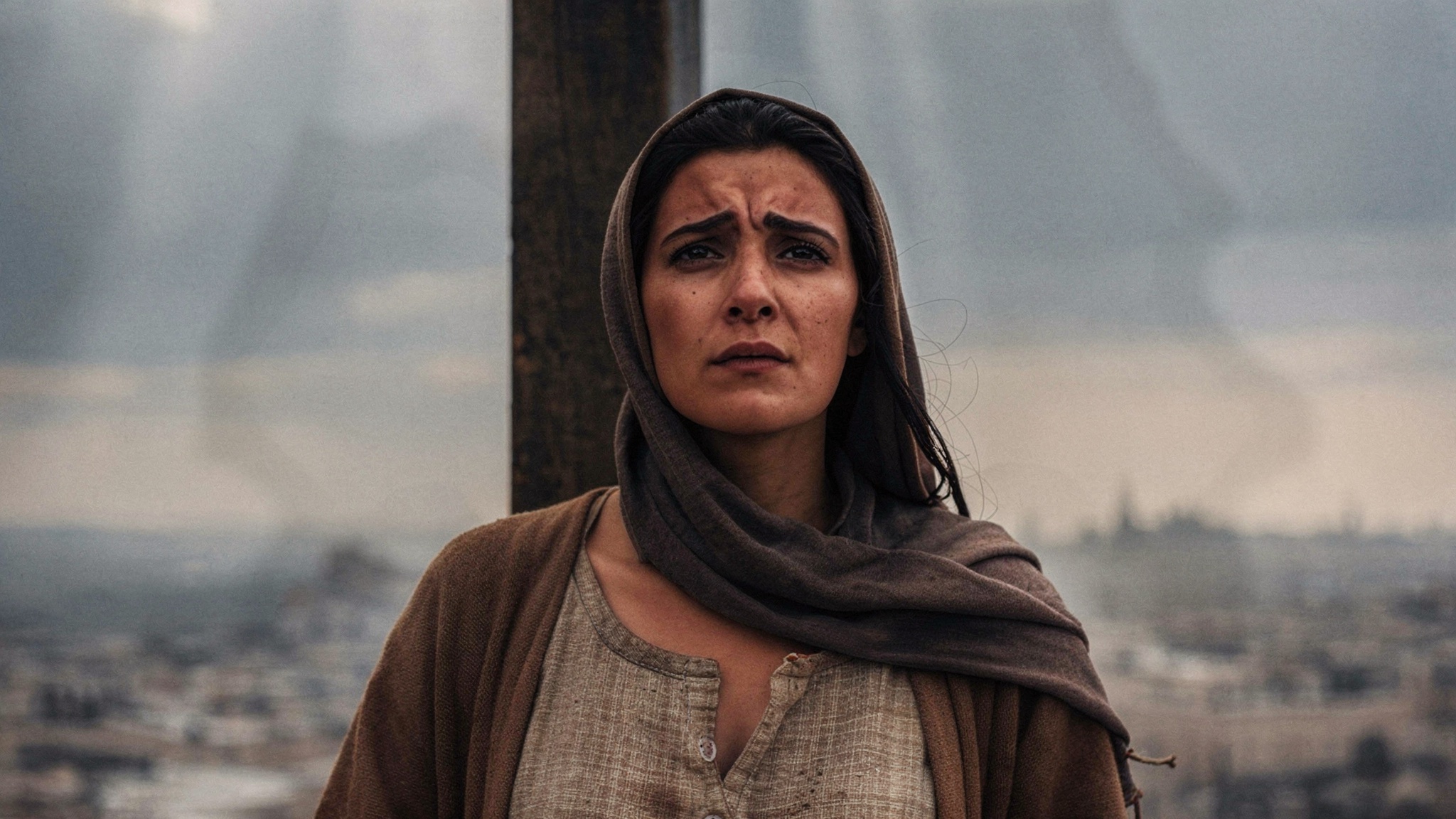
The First Witness
A journey through history, memory, and devotion
Witness
The greatest announcement in history was entrusted to someone the world learned to overlook.
Opening Movement
Her testimony is the foundation of Christian proclamation.
She is the hinge of the Resurrection story. Argurably, the hinge of the entire Christian story.

0:00 / 3:25
The Dawn that Changes Everything
In 1st-century Jewish burials, the body was visited on the third day to ensure the person was truly dead (as the "spirit" was thought to linger for three days). Mary was performing her legal duty. The fact that the "Gardener" met her there shows that Jesus respected the legal and ritual protocols she was so faithfully following.
The moment he says her name, her Tower (Magdala), her joy, and her identity are restored.
Two thousand years of Christian history have been shaped by this moment.
The world is still dim when she arrives.
The air is cold.
The stone is heavy.
Her grief is heavier.
She is not expecting revelation.
She is not expecting joy.
She is not expecting the world to turn.
Her experience at the cross has left her with a "Lament" that drowns out everything else. She is likely consumed-- for her strength and faithfulness of that day, has dwelled in the shadow of the cross, in devotional silence, for three days.
She comes to tend to a corpse —
the last act of devotion for the One who restored her name. A name that is once again in precarious balance.
And yet, in this quiet hour, the greatest announcement in history is about to be entrusted to someone the world overlooked.
This is the hinge of the Christian story. And she is standing on it, and steps forward to receive it.
The Gardener
As she walks, she turns and sees a figure.
She does not recognize Him.
She thinks He is the Gardener.
And the Gospel wants us to notice this.
Because in the first garden,
the first Adam failed to tend creation.
But in this new garden,
the New Adam stands resurrected,
tending the world that is being reborn.
Her misrecognition is not an error.
It is a symbol.
The world is being replanted.
The story is beginning again.
And she is the first human to behold the New Creation.
"Maryām!"
The text says she didn't reconize him by size, but by sound.
When Mary turns around and sees Jesus (mistaking him for the gardener), his absolute first recorded words to her are: "Woman, why are you weeping? Whom are you seeking?" (John 20:15)
The Context:
In 1st-century Greek, calling a woman "Woman" (Gynai) was not an insult or a dismissive term; it was a polite, formal address, much like saying "Madam" or "Ma'am" today. Jesus uses the exact same word for his own mother from the Cross ("Woman, behold your son"). It is a term of respect and recognition, not of dismissal.
The Veil:
By addressing her with a general, polite title, Jesus remains "veiled." He is speaking as the "Universal Human" or the "New Adam" tending the garden. He prompts her to look inward and realize that her tears are ill-founded because the death she is mourning has been conquered.
The Name:
And once recognition sets in, Jesus doesn't say "Woman" or "Mary." In the original Aramaic, he would have said "Maryām!"
She didn't just hear her name; she heard the sound of her own soul being put back together.
The Shepherd’s Voice:
In John 10:4: "He calls his own sheep by name... and the sheep follow him because they know his voice."
Your name is being called by the one who knows you best, the one who loves you most, the one who has been with you through everything. It is a voice that can cut through the noise of grief, doubt, and fear to reach the core of your being.
The moment he says her name, her Tower (Magdala), her joy, and her identity are restored.
"Noli Me Tangere" (Do Not Hold Me)
Jesus tells her, "Do not hold on to me, for I have not yet ascended" (John 20:17).
The Misinterpretation:
This is often painted as Jesus being "too holy" to be touched by a woman. But the original Greek is more accurately translated as "Do not hold on to me" or "Stop clinging to me." It suggests that Mary was trying to hold onto the physical presence of Jesus, but he was urging her to let go and embrace the new reality of his resurrection.
The Release:
Jesus is telling the Faithful Mary that the relationship has changed. She can no longer be the "follower" who clings to his physical feet; she must now be the Apostle who carries his message.
He is pushing the "Tower" to stand on her own.
He is pushing all of us to stand on our own...
The Commission
He does not comfort her.
He commissions her.
“Go to my brothers.”
This is the moment everything changes.
A woman —
in a world that did not trust women’s testimony —
is chosen as the first herald of the Resurrection.
This is not an accident.
This is not a footnote.
This is the theological shockwave at the center of Easter.
She came carrying the dead, she left carrying life.
Later generations would give her a name for this moment:
apostola apostolorum—
the apostle to the apostles.
Not because she held authority over them—
but because she was sent to them first.
She turns from the tomb
from what she came to tend— Mary turns toward those who had not yet seen.
By sending her to the men, he is making her the Primary Authority of the new faith. If Mary doesn't speak, the Resurrection remains a secret-- forever. Our own death, our own Hope forever lost.
The "Witness" isn't just someone who saw; it's the person who validates the event for everyone else.
Two thousand years of Christian history have been shaped by this moment.
Song of Songs 3:1-4
All night long on my bed
I looked for the one my heart loves;
I looked for him but did not find him.
I will get up now and go about the city,
through its streets and squares;
I will search for the one my heart loves.
So I looked for him but did not find him.
The watchmen found me
as they made their rounds in the city.
“Have you seen the one my heart loves?”
Scarcely had I passed them
when I found the one my heart loves.