Selah

🌎 The World Before the Word
The line moves slowly.
Someone ahead is searching through a wallet.
The cashier needs to check a price.
The person behind you sighs.
Your phone vibrates— or “da-da-dumps” like mine does.
Your schedule waits.
Nothing is truly wrong.
But something inside begins to press forward.
A subtle internal push forms: Let’s move. Come on.
The moment becomes smaller than it really is.
People become obstacles instead of neighbors.
No one notices the tension except the one carrying it.
The Old Reflex
The old reflex is quiet impatience.
Not anger.
Not harsh words.
Just inward pressure.
The mind rushes ahead while the present moment becomes something to endure rather than inhabit.
We justify it easily:
I have things to do.
Time matters.
Efficiency is good.
But the reflex slowly trains the heart to live slightly ahead of life itself.
And in that hurry, peace thins out.
🌿 The new Covenant Posture
The New Covenant forms people who are not driven by internal urgency but guided by the Spirit.
That means the soul can remain calm even when the moment moves slowly.
The present moment becomes a place to stand rather than a problem to solve.
Patience, then, is not wasted time.
It is a form of quiet trust.
📜 The Word
“Be still, and know that I am God. I will be exalted among the nations, I will be exalted in the earth.”
📖 Psalm 46:10
That verse comes at the end of Psalm 46. It’s important— for sure— but the entire Psalm matters.
Psalm 46 is a radical hymn of confidence in the middle of utter and total chaos. The psalm is structured by the musical term Selah, which signals a pause for reflection. Here is a breakdown of the movements leading to that famous command to "be still."
Phase 1: The Personal Refuge (Verses 1–3)
The psalm opens not with a request for help, but with a statement of fact: "God is our refuge and strength, a very present help in trouble."
The Contrast (one of the sons of Korah?): The writer uses the imagry of nature in revolt —mountains shaking and falling into the heart of the sea. In the ancient Near East, the sea represented primordial chaos.
The Takeaway: Even if the very foundations of the earth (the mountains) give way, the internal state of the believer remains anchored. It establishes that God isn't just a "last resort," but a constant presence.
Phase 2: The River of Gladness (Verses 4–7)
The imagery shifts abruptly from a crashing, foaming ocean to a "river whose streams make glad the city of God."
Quiet Confidence: Unlike the chaotic sea, this river is calm and life-giving. It’s interesting— Jerusalem doesn't actually have a major river; is this symbolic of God’s grace and the Holy Spirit flowing through His people. This one in particularly speaks to me. I have a love of rivers and sunsets. A year ago in June, I was certain there was a verse about singing and rivers— I was certain I read it on a certain day of devotional power— “selah”, a river? this section? Maybe but the search continues.
Perhaps Psalm 42:7— "Deep calls to deep in the roar of your waterfalls; all your waves and breakers have swept over me."
Divine Timing: Verse 5 says, "God will help her when morning dawns." This is a nod to the idea that another day may change your situation— a new sunrise, a renewed heart.
Phase 3: The Invitation to Behold (Verses 8–9)
Before we get to the "be still" part, the Psalmist invites us to look at the evidence.
The Deconstruction of War: God is depicted as the ultimate peacemaker—not through diplomacy, but through absolute sovereignty. The world breaks not from lack of control, but because of it.
The Context of Power: This section proves that God is active in the geopolitical world, not just in the "quiet heart" of the individual.
The Climax: "Be Still and Know" (Verse 10)
When we reach the famous command, we often interpret "be still" as a call to peaceful meditation. However, in the original Hebrew, the word is raphah.
Raphah literally means to "sink," "relax," or "let your hands hang down." It is a command to stop striving.
The final verse (11) repeats the refrain: "The Lord of hosts is with us; the God of Jacob is our fortress." It reminds us that the God who rules the cosmos is the same God who deals personally with "Jacob"—a man known for his own frantic striving. A mere man!
We too are blessed to be in his attendance.
Why it matters today.
This morning, I awoke early as I always do these days. Not because I can’t sleep, but because I don’t want to. I have things to do… I’m building an “app” … no, I dislike that word. I’m building a formation engine, and I’m driven to get it done and done right.
Some days this project leads me into internal struggles:
Am I done?
Not yet!
Good enough, not good enough. Okay, one more day… nope, this is important to add!
Can I cut this corner because I want it done? Nope— Do it right!
This internal struggle makes me impatient sometimes, but mostly I’m inspired.
The weird thing is I feel like I’m compelled to do this then the— it won’t matter, “nobody will care” bug enters the scene.
What did I wake up to this morning?
Psalm 46:10.
My own app picked it— it picks scripture intelligently based on the underlying engine that analyzes my posture. I blew it off, thinking, yea— that’s swell.
But then this:
About an hour later I was researching what I think is the last key item that needs to be done in the app. As a coder, that required some deep search and my opening salvo was simply:
“I'm ready to design this system's morning ‘first light’, or morning matins. A guided daily personal devotional based on my posture engine.”
It answered with this opening
Output style: gentle awareness
Example:
“Good morning. Today’s word comes from Psalm 46:10 — Be still and know that I am God.”
Your posture this morning leans toward Listening — a steady but slightly restless place.
So I' am “re-sharing” something I wrote back in January. I’m uncertain I shared it here previously, but it has renewed meaning.
I’m being told it’s all good— be still. Flow like a river.
🤵 Pastoral Word
…everyone is caught in their own traps they made themselves. So, here I am offering some guidance that works for me. Funny thing about stillness… when you do this below, even in short, but consistent bursts you’ll have new energy to walk right back into your own chaos. So, carry this with you in your pocket wherever you go.
Reflect on these words : "Be still and know that I am God."
Let them settle deep within your heart. In the rush of life—plans, demands, successes, failures—God invites you into a quieter place where His presence is felt clearly—right now. Stillness is not passivity; it is the intentional posture of faith that allows you to hear God’s voice, receive His peace, and align your life with His will.
When you pause to be still, you create room for clarity. God often speaks in the gentle, simple truths that get drowned out by noise and busyness. Quiet moments reveal what matters: relationships that need mending, priorities that require reordering, gifts to be stewarded, and burdens to lay at the Lord’s feet. In stillness you gain perspective—what once seemed urgent may lose its grip, and what is essential comes into focus.
Stillness cultivates trust. To rest in God’s sovereignty is to acknowledge that you are not ultimately in control; He is. This surrender is not defeat but freedom. It releases anxiety and fuels hope. As you practice being still, worry loses its hold because you remember God’s past faithfulness and His promises for the future. Trust grows when silence becomes a place of communion rather than a void.
Stillness deepens worship. When noise fades, worship becomes more intimate and sincere. You are able to listen as well as sing, to receive grace as well as give thanks. Scripture read in quietness often leaps off the page with fresh meaning. Prayer in stillness shifts from a checklist of requests to a heartfelt conversation—an exchange that transforms your inner life.
Make practical space for stillness in daily rhythms. Begin or end the day with a short period of silence—five to fifteen minutes—focused on prayer and Scripture. Turn off notifications for a set time each day. Take a mindful walk without a playlist, noticing God’s handiwork in creation. Practice a breathing prayer: slowly inhale while saying, "Lord, I trust You," and exhale saying, "I surrender." Over time, these small habits train your heart to find God’s presence amid chaos.
If silence feels uncomfortable, be patient with yourself. The practice of stillness is learned. Start small, celebrate progress, and rely on Scripture and the Holy Spirit to guide you. Remember Jesus, who often withdrew to solitary places to pray. Follow His example: make room for quiet, and He will meet you there.
Be still and know. Let stillness shape your choices, steady your soul, and deepen your faith. In that sacred pause, you will discover God’s direction, His comfort, and the renewing power of His presence.
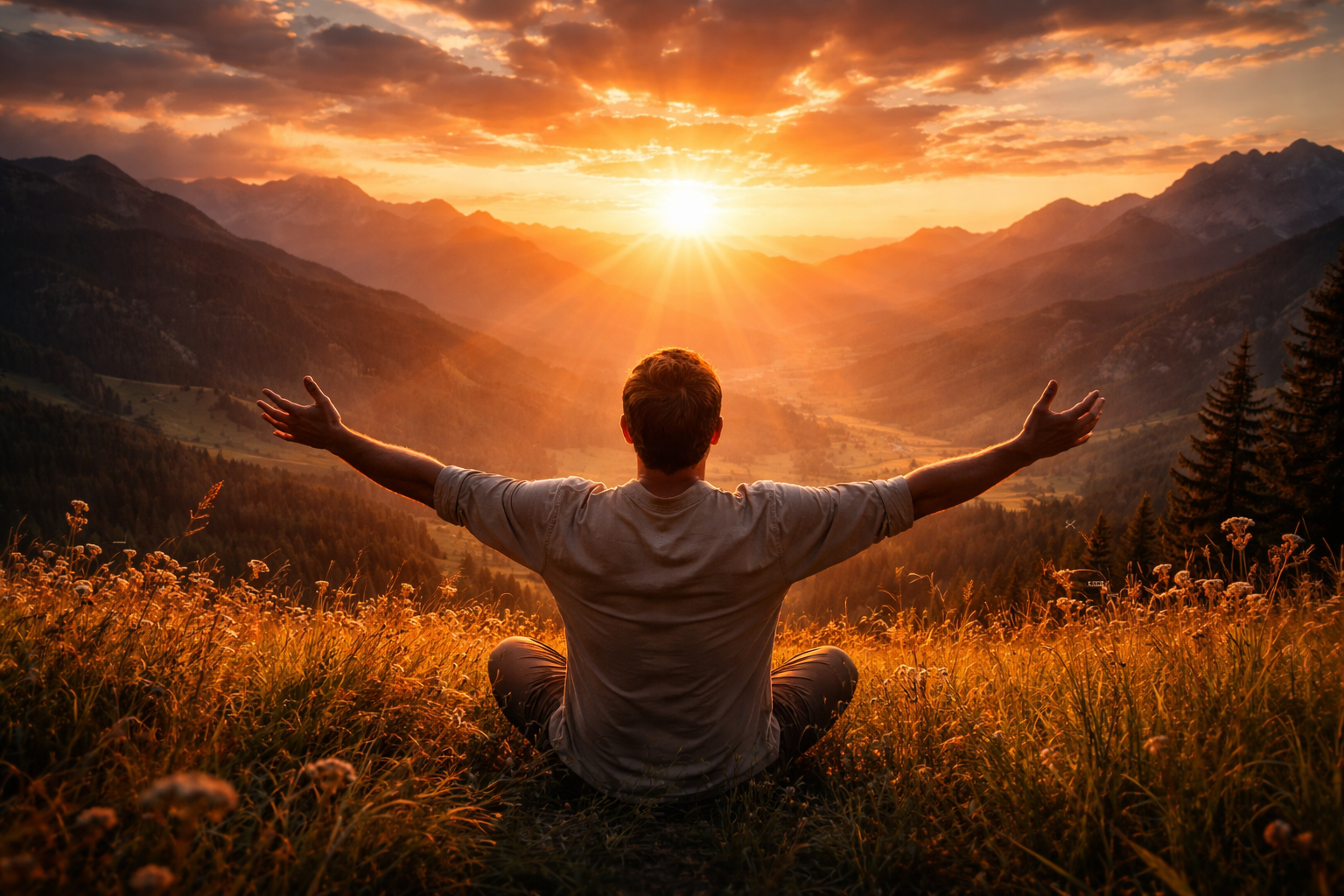
🙏 Let's Pray
May your spirit walk steadily through the hours before you.
When the pace of the world quickens
and the pressure to hurry quietly builds,
May you remember that your life is not carried by urgency
but by grace.
May small delays become invitations
to breathe more deeply,
to notice the people around you,
and to remain present in the moment God has given.
May patience settle your thoughts,
calm your reactions,
and widen your awareness of what truly matters.
And as you move through this day—
in lines, in traffic, in conversation, in work—
may your heart remain unhurried,
resting in the quiet confidence
that the One who holds time
is also holding you.
Amen
🔥 Carry this With You Today
I meet this moment at the pace of grace.